
How to Evaluate a Research Peptide Supplier: Purity, Testing and Documentation
The criteria a laboratory buyer applies when assessing where research peptides are sourced from: independent third-party testing, lot-linked certificates of analysis, HPLC purity, mass spectrometry identity, endotoxin data, lyophilization, traceability and research-use-only terms. Educational reference.
Introduction
Searches for where to buy research peptides, or for research peptides for sale, tend to return long lists of vendors and very little guidance on how a laboratory would distinguish between them. This article sets out the criteria a laboratory buyer applies when evaluating a research peptide supplier. It draws on published analytical-method guidance, laboratory-accreditation standards and formulation-science literature, and it addresses quality and documentation only. It makes no claims about the properties or effects of any compound, and it is written for the reader who needs a defensible sourcing rationale rather than a ranking.
The underlying logic is simple. A research result is only as interpretable as the identity and purity of the material behind it. Evaluating a supplier means asking what evidence exists for a specific lot, who generated it, and whether the material is sold in a way consistent with its research-use-only status.
Third-party testing versus in-house testing
The first distinction a laboratory buyer draws is between testing performed by the manufacturer on its own material and testing performed by an independent laboratory. In-house data have value; the question is whether they can be corroborated by a party with no commercial interest in the outcome.
ISO/IEC 17025, the international standard for testing and calibration laboratories, treats impartiality as a foundational requirement and specifies how results are to be reported for the specific items tested [1]. Accreditation to that standard, granted by bodies such as ANAB or A2LA, indicates that a laboratory operates under defined quality systems and method-validation requirements [2]. A supplier that submits lots to an accredited independent laboratory and publishes those reports gives a buyer something that internal data alone cannot: a second, disinterested measurement. The distinction is developed further in the library's explainer on certificates of analysis and third-party peptide testing.
Lot-linked certificates of analysis
A certificate of analysis (COA) is a batch-specific record. It documents the tests run, the methods used and the results obtained for one production lot, with identifiers tying the document to that lot [1]. Two properties determine whether a COA is useful to a laboratory. It must be lot-linked, so that the certificate can be matched to the vial in hand, and it must be method-transparent, so that a reader can see how each figure was produced.
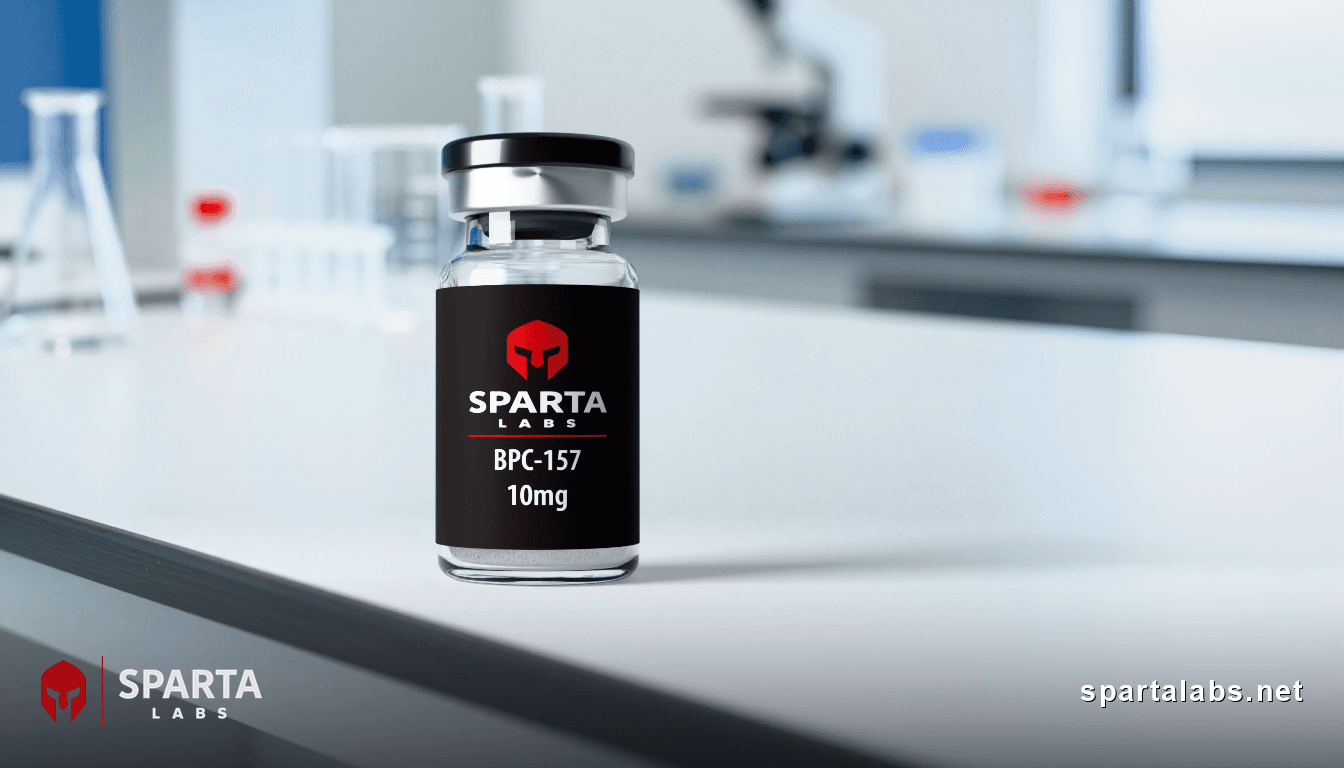
A laboratory buyer checks that the lot number on the certificate matches the product label, that the document is dated, that the methods are named, and that the issuing laboratory is identified. A certificate reporting only a headline purity percentage, with no lot, date or method, is not a record in any meaningful sense. Sparta Labs, as one example of the practice, states that its materials are third-party tested and makes per-lot certificates of analysis available through its lab results page.
HPLC purity and what the percentage means
High-performance liquid chromatography (HPLC) is the standard purity method for synthetic peptides. A dissolved sample is separated on a column, components elute at different times, and each is recorded as a peak. Purity is reported as the area of the main peak relative to the total area of all peaks detected [3]. A figure of 98% therefore means that, under the stated conditions and detector, the principal component accounted for 98% of what the instrument saw.
Several qualifications matter when reading that number. Purity is method-dependent: column, gradient, wavelength and detector all influence which impurities are resolved [3, 4]. Deletion sequences, truncated chains and oxidized variants can co-elute with the target under some conditions. And a purity value carries no information about identity; a chromatogram can show a single dominant peak that is the wrong molecule. A laboratory buyer therefore looks for the method alongside the number, and for a separate identity result.
Analytical-method validation guidance from the United States Pharmacopeia (General Chapter 1225) and the ICH Q2(R2) guideline describes the performance characteristics, including specificity, accuracy, precision and linearity, that a validated purity procedure is expected to demonstrate [5, 6]. A certificate that references validated or compendial methods gives a reader a basis for interpreting the reported percentage.
Mass spectrometry identity confirmation
Mass spectrometry (MS) measures the mass-to-charge ratio of ionized molecules and allows the molecular weight of a peptide to be determined with high precision. Electrospray ionization (ESI) and matrix-assisted laser desorption/ionization (MALDI) are the two techniques most often applied to peptides [7]. The measured mass is compared against the theoretical mass calculated from the intended amino acid sequence; agreement within the instrument's tolerance is the basis of an identity claim.
Coupled to liquid chromatography, LC-MS provides both separation and mass information in a single analysis. Lian and colleagues reviewed the characterization of synthetic peptides by LC-MS, including the detection of sequence variants and process-related impurities that a UV chromatogram alone would not distinguish [8]. In a supplier assessment, HPLC answers how much of the sample is the main component, and MS answers whether that component is the molecule it is supposed to be. A COA that reports both is materially more informative than one that reports either alone.
Endotoxin and sterility in research contexts
Endotoxins are lipopolysaccharide components of Gram-negative bacterial cell walls. In cell-based research, endotoxin contamination can activate innate-immune signaling in cultured cells and confound readouts that have nothing to do with the study compound. The Limulus amebocyte lysate (LAL) methods described in USP General Chapter 85 are the compendial reference for endotoxin quantification [9]. Relevance depends on context: endotoxin data matter for cell-culture work and less so for purely analytical applications.
Sterility is a separate question. Lyophilized research peptides are generally supplied as chemical reference materials, not as sterile pharmaceutical products. A supplier that reports endotoxin data where appropriate, and is clear about what has and has not been tested, is easier to evaluate than one that is silent on the point.
Lyophilization, cold chain and storage
Most synthetic research peptides are distributed as lyophilized (freeze-dried) solids. The published rationale is physical-chemical: in aqueous solution, peptides are subject to hydrolytic and other water-mediated degradation pathways whose rates depend on the presence and mobility of water, and removing the water reduces molecular mobility and the availability of water those pathways require [10, 11]. The dried form is also described in the literature as more robust to temperature excursions during transport than the corresponding solution [12]. The library's article on why peptides are lyophilized treats the physical chemistry in more depth.
From a sourcing standpoint, the relevant checks are whether the material is supplied as a lyophilized solid, whether storage conditions and an expiry or retest date appear on the certificate, and whether shipping practice is consistent with the stability profile of a dried peptide. These are questions about the material as a stored substance and carry no procedural meaning.
Batch traceability and documentation
Traceability is the ability to follow a specific lot from synthesis through purification, testing and shipment. In the peptide manufacturing literature, the combination of solid-phase synthesis with preparative reversed-phase HPLC purification and batch-level analytical release is described as the standard production route for research-grade material [13, 14]. A supplier with real traceability can, for any lot, produce the certificate, identify the testing laboratory and state when the material was made.
Practically, a laboratory buyer looks for lot numbers on labels, matching lot numbers on certificates, manufacturing and test dates, and a stable product listing. Product listings such as those for BPC-157 or TB-500 in the Sparta Labs catalog are examples of the kind of page on which a buyer expects to find the sequence, molecular weight and a route to lot-specific documentation, rather than descriptions of use.
RUO labeling, terms of sale and business transparency
Research-use-only (RUO) status is a regulatory position, not a slogan. FDA guidance describes RUO labeling as appropriate for products intended for laboratory research and not for clinical or diagnostic use, and it makes clear that the intended use of a product is judged from all the circumstances of its marketing, not from the label alone [15]. A supplier whose product pages, articles and terms of sale consistently describe laboratory research, and that requires purchasers to acknowledge research-use-only terms, is operating within that framework. A supplier whose marketing describes human administration is not, regardless of what the label says.
Business transparency belongs in the same assessment: a physical address, a working contact channel, identifiable ownership and consistent regulatory language across the site are signals a procurement process can check. The broader Sparta Labs catalog is presented in that register, with product listings that describe chemistry and documentation rather than outcomes.
Red flags
Several patterns recur in supplier listings that fail the criteria above. Each undermines either the analytical record or the research-use-only status of the material.
- No certificate of analysis at all, or a certificate available only on request with no lot linkage.
- Purity claims without a method, such as a bare "99% pure" with no chromatographic conditions, no date and no issuing laboratory.
- No identity data. A purity percentage with no mass spectrometry result leaves the question of what the main peak actually is unanswered.
- Claims of human use or health outcomes in product descriptions, articles or advertising. Under the intended-use framework, this content redefines the product regardless of RUO labeling [15].
- Dosing guides, protocols or reconstitution instructions presented alongside research material. These are use instructions and are inconsistent with research-use-only supply.
- Superlative ranking language such as "best research peptide supplier," which is a marketing claim rather than a documentable quality attribute.
- Missing or evasive business information, including no address, no named entity and no way to reach a person.
Regulatory framing
Research peptides supplied under RUO terms are laboratory reference materials, not approved drugs, dietary supplements or products for human consumption, and the documentation described in this article does not change that status. HPLC purity, mass spectrometry identity and endotoxin data describe what a material analytically is; they do not establish safety or efficacy in humans. The regulatory status of any individual peptide is a matter of public record and varies compound by compound. Readers new to the field may find the library's overview of what peptides are a useful starting point.
Summary
A laboratory buyer evaluating a research peptide supplier asks a bounded set of questions. Is testing performed by an independent, accredited laboratory? Is the certificate of analysis lot-linked, dated and transparent about methods? Is HPLC purity reported with its conditions, and is identity confirmed by mass spectrometry? Are endotoxin data available where the research context calls for them? Is the material a lyophilized solid with stated storage conditions, and can the lot be traced? Is it labeled, marketed and sold consistently with research-use-only status? A supplier that answers those questions with documents rather than adjectives is one whose material can be described accurately in a methods section.
References
- International Organization for Standardization. ISO/IEC 17025:2017. General requirements for the competence of testing and calibration laboratories. Geneva: ISO; 2017. Source: iso.org (Clause 4.1 impartiality; Clause 7.8 reporting of results for the specific items tested.)
- ANSI National Accreditation Board (ANAB). ISO/IEC 17025 Accreditation: general requirements for the competence of testing and calibration laboratories. Source: anab.ansi.org
- Moffatt F, Senkans P, Ricketts D. Approaches towards the quantitative analysis of peptides and proteins by reversed-phase high-performance liquid chromatography in the absence of a pure reference sample. J Chromatogr A. 2000;891(2):235-242. PMID: 11043783 (doi:10.1016/s0021-9673(00)00620-8)
- Molina-Martin M, Marin A, Rivera-Sagredo A, Espada A. Liquid chromatography-mass spectrometry and related techniques for purity assessment in early drug discovery. J Sep Sci. 2005;28(14):1742-1750. PMID: 16224969 (doi:10.1002/jssc.200500107)
- United States Pharmacopeial Convention. General Chapter <1225> Validation of Compendial Procedures. USP-NF. Rockville, MD: USP. See also US Food and Drug Administration. Analytical Procedures and Methods Validation for Drugs and Biologics: Guidance for Industry. July 2015. Source: fda.gov
- International Council for Harmonisation. ICH Harmonised Guideline Q2(R2): Validation of Analytical Procedures. November 2023. Source: database.ich.org; adopted by FDA as guidance for industry, March 2024. Source: fda.gov
- Strupat K. Molecular weight determination of peptides and proteins by ESI and MALDI. Methods Enzymol. 2005;405:1-36. PMID: 16413308 (doi:10.1016/S0076-6879(05)05001-9)
- Lian Z, Wang N, Tian Y, Huang L. Characterization of synthetic peptide therapeutics using liquid chromatography-mass spectrometry: challenges, solutions, pitfalls, and future perspectives. J Am Soc Mass Spectrom. 2021;32(8):1852-1860. PMID: 34110145 (doi:10.1021/jasms.0c00479)
- United States Pharmacopeial Convention. General Chapter <85> Bacterial Endotoxins Test. USP-NF. Rockville, MD: USP. Source: usp.org
- Manning MC, Chou DK, Murphy BM, Payne RW, Katayama DS. Stability of protein pharmaceuticals: an update. Pharm Res. 2010;27(4):544-575. PMID: 20143256 (doi:10.1007/s11095-009-0045-6)
- Wang W. Lyophilization and development of solid protein pharmaceuticals. Int J Pharm. 2000;203(1-2):1-60. PMID: 10967427 (doi:10.1016/S0378-5173(00)00423-3)
- Preston KB, Randolph TW. Stability of lyophilized and spray dried vaccine formulations. Adv Drug Deliv Rev. 2021;171:50-61. PMID: 33484735 (doi:10.1016/j.addr.2021.01.016)
- Andersson L, Blomberg L, Flegel M, Lepsa L, Nilsson B, Verlander M. Large-scale synthesis of peptides. Biopolymers. 2000;55(3):227-250. PMID: 11074417 (doi:10.1002/1097-0282(2000)55:3<227::AID-BIP50>3.0.CO;2-7)
- Amblard M, Fehrentz JA, Martinez J, Subra G. Methods and protocols of modern solid phase peptide synthesis. Mol Biotechnol. 2006;33(3):239-254. PMID: 16946453 (doi:10.1385/MB:33:3:239)
- US Food and Drug Administration. Distribution of In Vitro Diagnostic Products Labeled for Research Use Only or Investigational Use Only: Guidance for Industry and Food and Drug Administration Staff. November 2013. Source: fda.gov
Frequently asked questions
What does a laboratory buyer look for in a research peptide supplier?
Published quality frameworks point to a consistent set of criteria. These include analytical testing performed by a laboratory independent of the manufacturer, a certificate of analysis tied to the specific lot being purchased, HPLC purity reported with its method, mass spectrometry confirmation of molecular identity, and clear research-use-only labeling and terms of sale. Transparent business and contact information is also part of the assessment.
What is the difference between third-party testing and in-house testing?
In-house testing is performed by the manufacturer or seller on its own material. Third-party testing is performed by a separate laboratory with no commercial stake in the result. ISO/IEC 17025 treats impartiality as a foundational requirement for testing laboratories, which is why independent results carry more weight in a supplier assessment than internal results alone.
What does an HPLC purity percentage mean on a peptide certificate of analysis?
An HPLC purity figure is the area of the main chromatographic peak expressed as a proportion of the total peak area detected under the stated method. A value such as 98% means the target compound accounted for that share of the detected material. The number is method-dependent and says nothing about whether the main peak is the intended molecule, which is what mass spectrometry addresses.
Why does a certificate of analysis need to be lot-linked?
A certificate of analysis describes one production lot, not a product line, because manufacturing output can vary between batches. A certificate without a lot number that matches the material in hand cannot be connected with confidence to that material. Lot linkage is what makes the document usable as a record in a laboratory notebook or a methods section.
What are red flags when sourcing research peptides?
Published quality guidance and regulatory framing point to several warning signs. These include the absence of any certificate of analysis, certificates that are undated or not tied to a lot, purity claims without a named method, marketing that describes human use or health outcomes, and dosing guides or protocols presented alongside research-use-only material. Each of these undermines either the analytical record or the research-use-only status of the material.
Is research peptide testing a statement about safety in humans?
No. HPLC, mass spectrometry and endotoxin testing describe what a material analytically is. They do not establish safety, efficacy or suitability for any use in humans, and they do not change the regulatory status of a research-use-only material. Analytical documentation is a record of identity and purity, nothing more.