
BPC-157 and TB-500 Blend: A Research Overview
A research-library overview of the BPC-157 and TB-500 blend: what each component peptide is, their chemistry and classification, and the regulatory status of both. Educational reference.
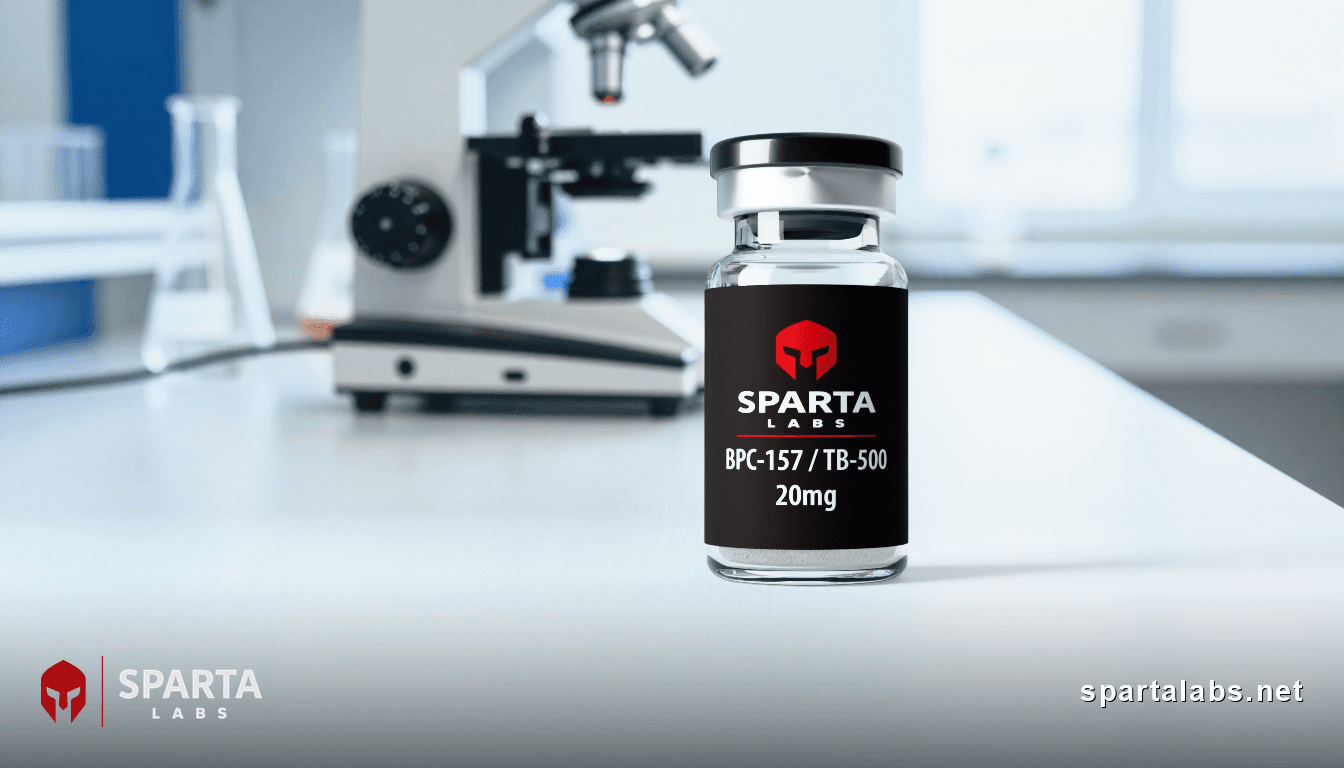
For research use only. Not for human consumption. This article is educational reference material. It is not medical advice and is not a recommendation to use any substance.
Introduction
A "BPC-157 TB-500 blend" is a co-formulated research material that combines two distinct synthetic peptides, BPC-157 and TB-500, in a single preparation. Each component is an independently characterized compound with its own sequence, origin, and published literature, and the two are frequently discussed together within the healing and regenerative research cluster of the peptide literature. This article is an educational reference summarizing what each component peptide is, its chemistry and pharmacological classification, and the regulatory status of both, based on peer-reviewed publications and official sources. It does not describe any use, does not compare the relative activity of the two peptides, and makes no claim about the combination. Neither BPC-157 nor TB-500 is approved by the U.S. Food and Drug Administration (FDA) for any human use.
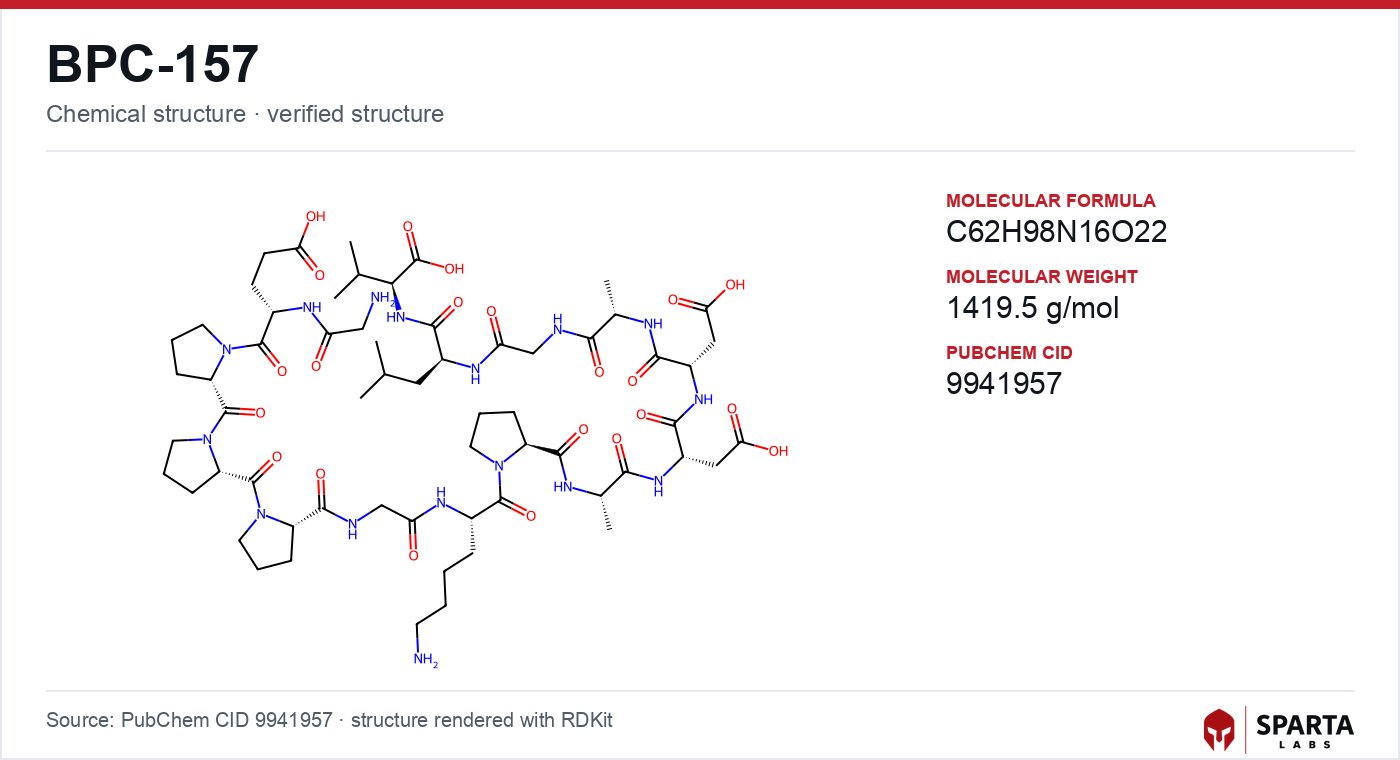
Figure: chemical structure of BPC-157, a component of this blend.
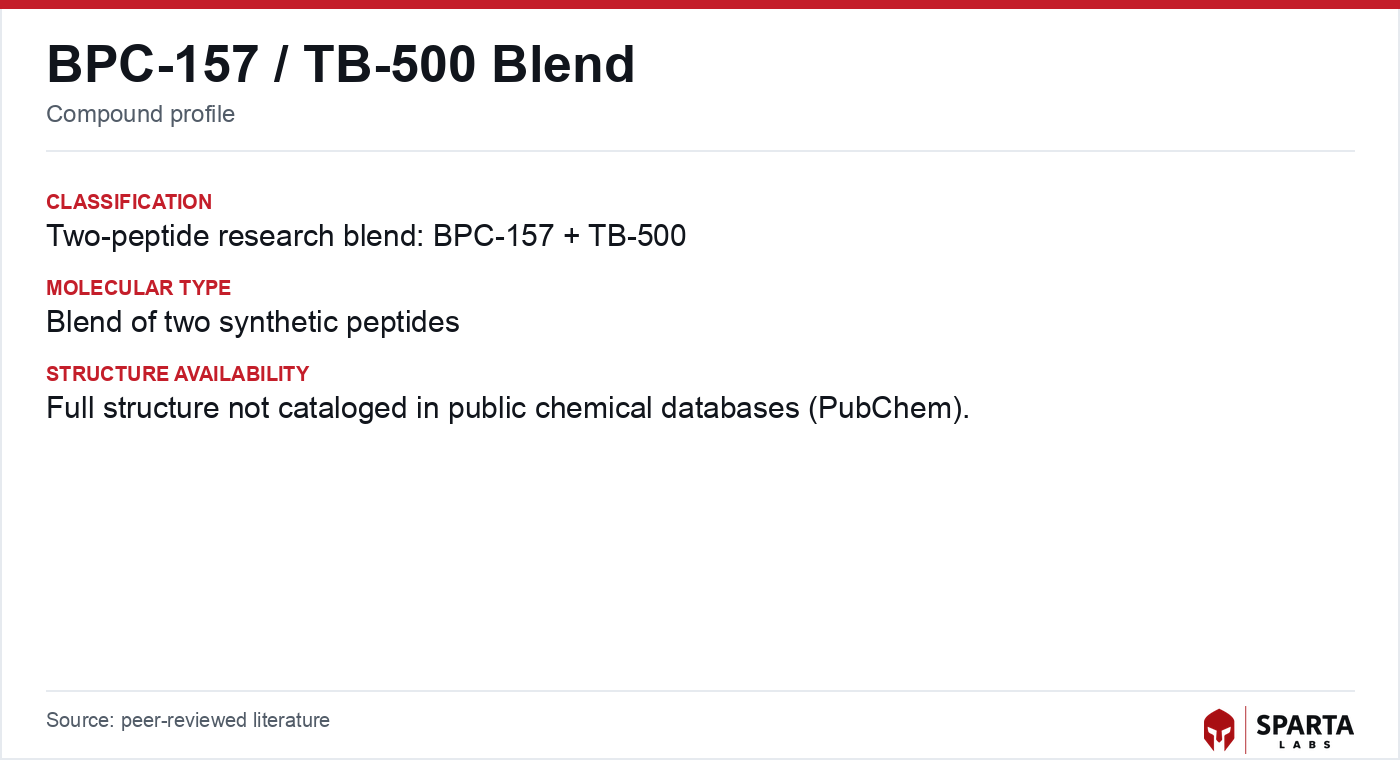
Figure: BPC-157 and TB-500 blend components.
Background
The two compounds in this blend are best understood as separate research peptides that are frequently studied and catalogued side by side. BPC-157 is a synthetic peptide whose sequence corresponds to a fragment of a larger protein described in the research literature as a "body protection compound" associated with gastric juice [1]. TB-500 is the research-market designation for a synthetic peptide corresponding to a central active region of thymosin beta-4 (Tβ4), a naturally occurring actin-binding protein [2,3]. Both sit within what internal-linking conventions in the research-peptide literature group as the "healing and regenerative" cluster, alongside compounds such as GHK-Cu and KPV.
Because a blend contains two independent molecules, its chemistry, classification, and regulatory profile are simply the union of the profiles of its components. The sections below treat each component in turn. A structural, side-by-side treatment of the two molecules is available in the library's BPC-157 vs TB-500 comparison article, and the standalone TB-500 research overview covers that component in isolation.
Chemistry and structure
BPC-157 component
BPC-157 is commonly described as a pentadecapeptide, a single-chain peptide 15 amino acids in length, with the reported sequence Gly-Glu-Pro-Pro-Pro-Gly-Lys-Pro-Ala-Asp-Asp-Ala-Gly-Leu-Val and a molecular weight of approximately 1,419 daltons [1]. A structurally notable feature of the molecule is its high proline content: four of the 15 residues are proline, including a consecutive triple-proline stretch near the N-terminus, a feature associated in the literature with conformational rigidity and stability in gastric acid [1]. The synthetic form is produced by solid-phase peptide synthesis and is chemically identical to the partial gastric sequence it derives from.
TB-500 component
TB-500 is generally described as a synthetic, N-terminally acetylated heptapeptide (Ac-LKKTETQ) corresponding to the central actin-binding region of thymosin beta-4, with a molecular weight of approximately 839 daltons [2,3]. Its parent molecule, thymosin beta-4, is described in the literature as a 43-amino-acid actin-sequestering protein present in many mammalian tissues [2]. The sequence usage of "TB-500" varies in the research market, so the precise residue identity of any given preparation is defined by its stated sequence and should be confirmed against a primary source. Both components of the blend are single-chain synthetic peptides rather than small-molecule compounds.
Pharmacological classification
The two peptides in the blend fall into different molecular lineages, and neither is classified within a conventional receptor-agonist pharmacological class.
BPC-157 is described in the published literature as a synthetic gastric-protein-derived oligopeptide and has been referred to variously as a cytoprotective peptide and a stable gastric pentadecapeptide, reflecting the gastroenterology origins of its research program [1]. It is generally treated as a stand-alone synthetic peptide not assigned to an established endogenous protein family.
TB-500, by contrast, sits within the beta-thymosin family by virtue of its relationship to thymosin beta-4, whose reported molecular role in the literature centers on actin binding and sequestration [2,3]. These are descriptions of molecular lineage and reported biochemistry drawn from primary sources, not statements of clinical effect, and any mechanistic detail is attributed to the specific study reporting it. Because the blend combines a gastric-protein-fragment peptide with an actin-binding-protein-fragment peptide, its two components are classified separately rather than as a single pharmacological entity.
Published research and regulatory status
The published research associated with both components is predominantly preclinical: animal-model (largely rodent) and in-vitro work.
Findings from research models do not establish safety or efficacy in humans. Sparta Labs makes no claims about the use of this compound.
For BPC-157, a body of rodent-model literature has reported observations following administration in various tissue-injury systems, and a 2025 literature and patent review catalogued the breadth of the corpus and noted that comprehensive clinical studies in humans remained an active area of investigation [4]. For the TB-500 component, the parent protein thymosin beta-4 has been examined in some human clinical research contexts as a distinct investigational agent, including a phase 2 randomized trial reported in Cornea in 2015 [5]; the research-market fragment "TB-500" itself has not been the subject of the same approved-drug pipeline.
Neither BPC-157 nor the research-market compound "TB-500" is approved by the FDA for any human indication; both appear in the context of the FDA's Section 503A interim compounding-bulks framework rather than as approved products [6]. Separately, the World Anti-Doping Agency (WADA) classifies thymosin beta-4 and its derivatives, including TB-500, under the S2 category of the Prohibited List as growth factor modulators [7]. Because a blend contains both molecules, both regulatory descriptions apply to the combined preparation. The research-grade BPC-157 and TB-500 blend from Sparta Labs is verified by third-party testing and accompanied by a certificate of analysis for each batch; the general principles of that testing are described in the library's Certificate of Analysis and peptide testing reference.
Discovery history
The two components trace to separate discovery lineages. BPC-157's research history originates with work begun in the early 1990s at the University of Zagreb, Croatia, under Predrag Sikirić and colleagues, whose foundational 1993 publication described the parent "body protection compound" protein isolated from human gastric juice and identified the partial peptide sequences from which BPC-157 emerged [1]. TB-500's lineage traces instead to thymosin beta-4, whose complete amino-acid sequence was characterized by Low, Hu, and Goldstein in 1981, with its actin-sequestering role established in subsequent structural and biochemical work through the 1990s and 2000s [2,3]. The convention of combining or cataloguing the two together is a feature of the more recent research-peptide market rather than of their original, independent discovery records.
References
The following references were verified against primary and official sources. No authors, years, journals, or DOIs were fabricated.
-
Sikirić P, Petek M, Rucman R, Seiwerth S, Grabarević Z, Rotkvić I, et al. A new gastric juice peptide, BPC. An overview of the stomach-stress-organoprotection hypothesis and beneficial effects of BPC. J Physiol Paris. 1993;87(5):313–327. PMID: 8298609. View on PubMed
-
Low TL, Hu SK, Goldstein AL. Complete amino acid sequence of bovine thymosin beta 4: a thymic hormone that induces terminal deoxynucleotidyl transferase activity in thymocyte populations. Proc Natl Acad Sci USA. 1981;78(2):1162–1166. PMID: 6940133. View on PubMed
-
Safer D, Elzinga M, Nachmias VT. Thymosin beta 4 and Fx, an actin-sequestering peptide, are indistinguishable. J Biol Chem. 1991;266(7):4029–4032. PMID: 1999398. View on PubMed
-
Józwiak P, Lipiec K, Maleszka A, Krześlak A. Multifunctionality and possible medical application of the BPC 157 peptide: literature and patent review. Pharmaceuticals. 2025;18(2):185. PMID: 40005999. DOI: 10.3390/ph18020185. View on PubMed
-
Sosne G, Dunn SP, Kim C. Thymosin β4 significantly improves signs and symptoms of severe dry eye in a phase 2 randomized trial. Cornea. 2015;34(5):491–496. PMID: 25826322. View on PubMed
-
U.S. Food and Drug Administration. Certain Bulk Drug Substances for Use in Compounding That May Present Significant Safety Risks (Section 503A interim bulk drug substances list). Source: fda.gov: neither BPC-157 nor the research-market "TB-500" fragment is FDA-approved; both appear on the interim compounding-bulks list rather than as approved products.
-
World Anti-Doping Agency. The Prohibited List 2024. Montreal: WADA; 2024. Source: wada-ama.org: thymosin beta-4 and its derivatives, including TB-500, are classified under the S2 category as growth factor modulators.
Disclaimer. Statements in this article have not been evaluated by the Food and Drug Administration. This compound is not intended to diagnose, treat, cure, or prevent any disease. Sparta Labs sells research-use-only materials. Content is provided for educational and informational purposes only and does not constitute medical advice. Consult a qualified medical professional for any health concerns.
Frequently asked questions
What is a BPC-157 and TB-500 blend?
A BPC-157 TB-500 blend is a co-formulated research material that combines two distinct synthetic peptides in a single preparation. BPC-157 is a 15-amino-acid peptide derived from a gastric-juice-associated protein, and TB-500 is a synthetic peptide corresponding to a central active region of thymosin beta-4. Each component is an independently characterized compound with its own sequence and published literature.
What are the two peptides in a BPC-157 TB-500 blend?
The blend contains BPC-157 and TB-500. BPC-157 is commonly described as a pentadecapeptide with the sequence Gly-Glu-Pro-Pro-Pro-Gly-Lys-Pro-Ala-Asp-Asp-Ala-Gly-Leu-Val, while TB-500 is generally described as an N-terminally acetylated heptapeptide (Ac-LKKTETQ) corresponding to the actin-binding region of thymosin beta-4. Both are single-chain synthetic peptides rather than small-molecule compounds.
Is the BPC-157 TB-500 blend FDA approved?
No. Neither BPC-157 nor the research-market compound TB-500 is approved by the U.S. Food and Drug Administration for any human indication, and both appear in the context of the FDA's Section 503A interim compounding-bulks framework rather than as approved products. Because a blend contains both molecules, both regulatory descriptions apply to the combined preparation.
How do BPC-157 and TB-500 differ structurally?
The two components trace to different parent proteins. BPC-157 is described as a fragment derived from a gastric-juice-associated body protection compound, while TB-500 is described as a fragment related to thymosin beta-4, an endogenous actin-binding protein. BPC-157 is characterized as a 15-residue peptide and TB-500 as a shorter acetylated heptapeptide.